 Saifullah Ahad
How I built it
 Ugong: Vehicle Sound CheckLive on Google Play
Ugong: turning a strange engine noise into evidence
Vehicle Sound Check, live on Google Play. Built by AI agents from my spec — and tested until the core engine really worked.
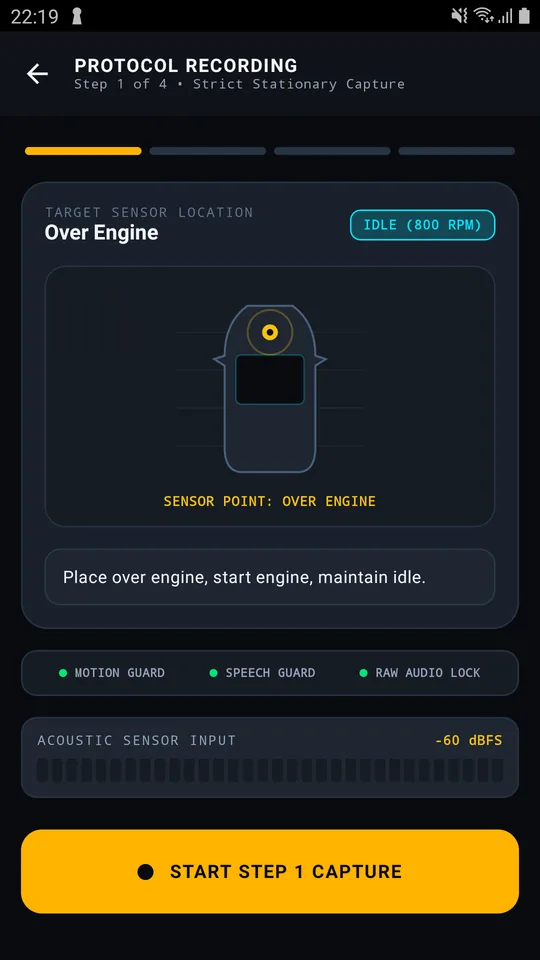
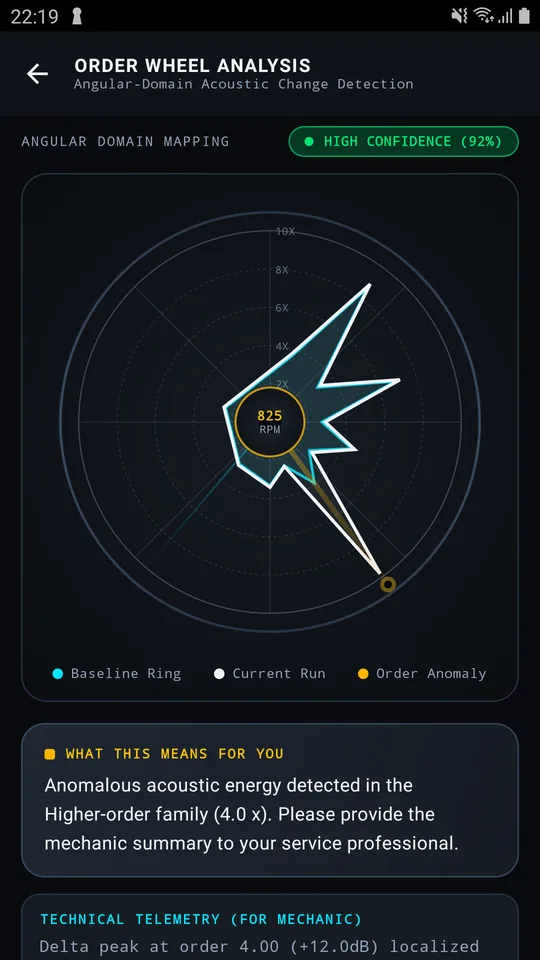
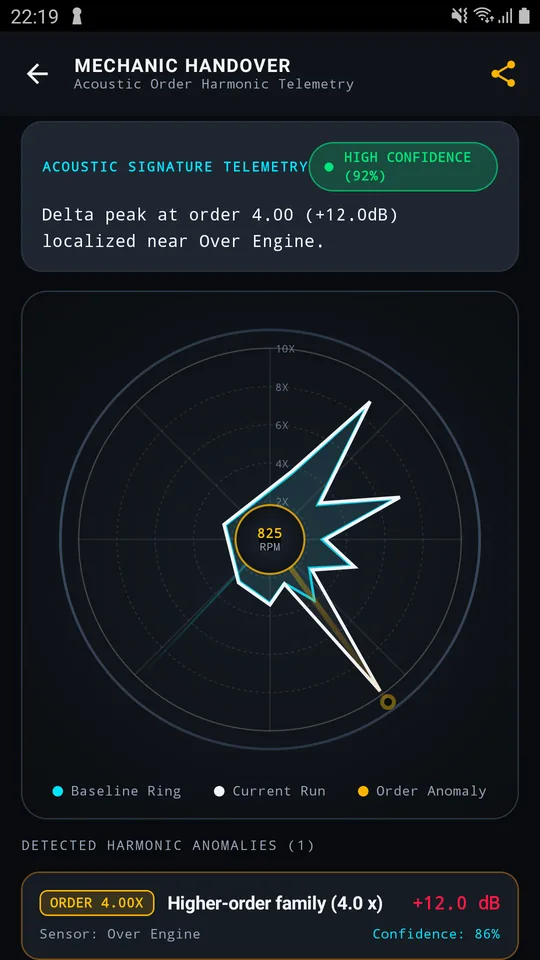
01
The problem
A vehicle starts making a noise. The owner can only describe it in words, the noise never happens at the workshop, and parts get replaced that were fine.
02
The plan I wrote
A fixed recording routine — the phone in named positions, the engine held at stated speeds — so two recordings can really be compared. The sound is analyzed against engine rotation instead of time, which turns a blurry smear into a sharp signal.
The app shows where the extra sound energy sits and how sure it is, compares it with the same vehicle's earlier recording, and hands the mechanic the evidence. It never names a part to replace, and it never records while the vehicle is moving.
03
The build
AI coding agents built it from my written specification. My work was the specification, the tests it had to pass, and the review.
04
The proof
The first check was wrong: an agent marked the app ready after only opening it — the sound analysis had never run. Making it run for real exposed three bugs: the results were too big to save; the first fix then threw away the very peak it was meant to find; and the summary described a different problem from the one it measured. All three were fixed, and an automated test was added.
Then a test that could fail, on the final release build: a 400 Hz tone read as a 3× pattern and an 800 Hz tone as a 5× pattern, both with high confidence. The result changes when the sound changes — so it is measuring, not guessing.
05
The launch
Checked on real devices — an Infinix phone and a Galaxy Tab S3 — rebuilt for Google Play's newest Android requirement before its deadline, and live on Google Play with its store listing, screenshots and privacy page.
What this shows about how I work
- I don't accept "done" until the core engine has really run.
- I turn a claim into a test that could fail — and check that it doesn't.
- I ship the whole thing: store listing, privacy page, screenshots and release.
How to describe a car noise so a mechanic can find it
Noises often stop the moment you reach the workshop. Before you go, note:
- When it happens. Starting, idling, speeding up, braking, turning or going over bumps.
- What changes it. If it rises with engine speed while standing still, the engine area is a likely place to look. If it changes with road speed, look at the wheels, brakes and the parts that turn them.
- Where it seems to come from. Front or back, left or right, under the hood or underneath.
- What it sounds like. Rattle, squeal, knock, hum or grind, and whether it is steady or comes and goes.
- Record it the same way each time. Then the mechanic hears what you hear. If the brakes or steering feel wrong, stop driving and get help first.
Ugong makes that recording repeatable: the phone in named positions and the engine at stated speeds, analyzed against engine rotation, compared with the same vehicle's earlier recording. It never names a part to replace, and it never records while the vehicle is moving.
More build stories: How to check a used phone before buying · How to check if your electricity meter is running fast · Eelj: a fair turn for a village’s one harvester · Practicing stuttering techniques at home · Where and when to look for the new crescent moon · How to split electricity bill with roommates · Milk fat SNF rate calculator, step by step · How to check a link before you click it · How to calculate cattle weight without a scale · How to settle who owes who in a group · Braille translator that explains every cell · Math learning gaps: where to start when a child is stuck · Convert Rumi to Jawi, then check the spelling · How to sync SRT subtitles with video · How to measure land area with phone GPS · Quran pronunciation app, tap any word to hear it · Lipi: Bangla keyboard, side by side with Ridmik · How to check an overseas employment contract · Extract data from graph image on Android · VaporSill: how to tell if damp or condensation · Dinig: doorbell alert for deaf · GlyphFlow: reading apps for dyslexia adults · Tnixxif: how to dry rice after harvesting · Lohkat: kids reading practice at home · PayProof: employer not paying salary, what to do · Oinordetza: how to divide inheritance in Islam · Energy Loom: how to calculate battery backup time · How to find dead spots in wifi, room by room · Beehive inspection checklist: what to check and how often
Open to work
Let's build your AI product system.
Full-time roles — remote anywhere, hybrid in Bangladesh, or on-site abroad: AI Product Builder, AI Product Manager, AI Workflow Orchestrator, Product Delivery Lead.
Based in Dhaka, Bangladesh (UTC+6) · works any time zone · can start now · ready to relocate with visa sponsorship.